WNYC’s “ON THE MEDIA” Launches AMERICAN EMERGENCY: THE MOVEMENT TO KILL FEMA
Four-episode series begins airing today
Listen to the first episode here
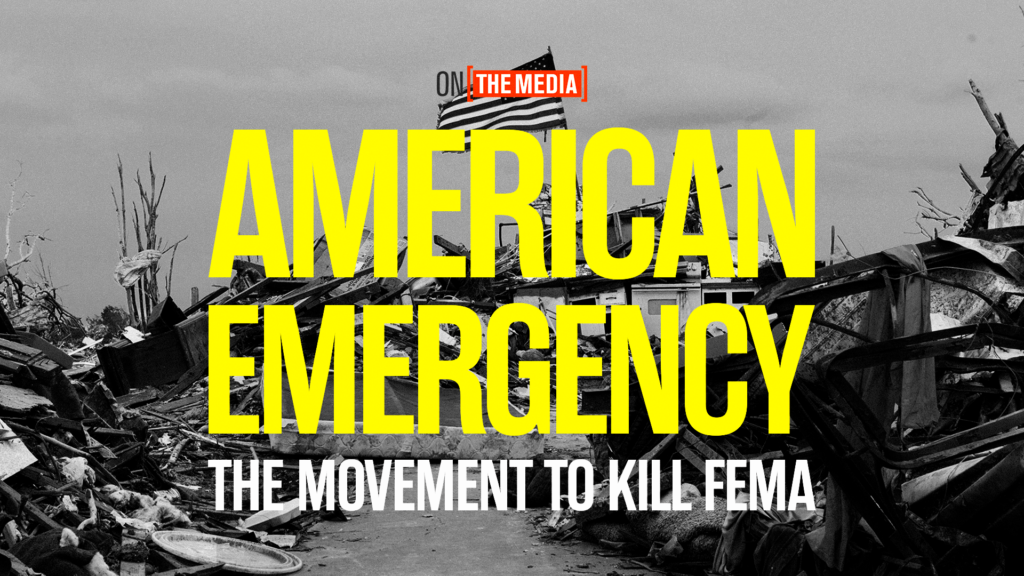
NEW YORK, NY — May 1, 2026 Today, WNYC’s On The Media launches “American Emergency: The Movement To Kill FEMA,” a new investigation into the storied history of the Federal Emergency Management Agency, and the current effort to defund it.
From his years of reporting on far-right militias, OTM co-host Micah Loewinger knew that these kinds of groups often showed up after natural disasters hit to recruit, fundraise, and spit-shine their public image. But it wasn’t clear why they hated FEMA so much. After digging around in right-wing media archives, it became clear that the anti-FEMA lore went back decades.
In this four-part series, On The Media investigates how the agency tasked with saving America became so distrusted, despised, and defunded, and asks whether it can survive the stories that have been told about it. We’ll hear about FEMA’s identity crisis during Hurricane Katrina and how conspiracy theories have fueled violent threats against first responders. Now, in this time of great political polarization, we’ll also learn more about how a group of anonymous FEMA employees are fighting to keep the agency alive under Trump.
“When Micah first pitched the idea for ‘American Emergency,’ it had all the elements of a quintessential On The Media story – it’s urgent, relevant, and misunderstood by the media-consuming public,” said Katya Rogers, Executive Producer of On The Media. “Micah has uncovered an under-reported history of the agency, found first-person stories that share the best and the worst of the organization, and illustrated what this country risks should FEMA disappear.”
American Emergency will run for four weeks through May 2026, with new episodes available on Fridays on all podcast platforms.
EPISODE DESCRIPTIONS:
Episode 1 (May 1): The Secret City
FEMA’s secretive start gives rise to distrust and conspiracy
The origin story of FEMA, focused less on disaster relief and more on plans to save the government from nuclear attack. The agency’s secrecy inspired wild conspiracy theories and paranoia among far-right groups, including the fear that FEMA is building camps to detain citizens and stifle political dissent. The episode culminates with a never-before-told story of a plot to stalk and kill FEMA’s top brass in the 90s.
Episode 2 (May 8): “Where’s FEMA?”
Hurricane Katrina triggers an identity (and publicity) crisis at FEMA
The war on terror left FEMA unprepared for Hurricane Katrina, one of the costliest disasters in U.S. history. Experts had warned about this kind of storm for years, but when it hit the agency only had one staffer on the ground: a PR guy named Marty Bahamonde. He became an unlikely hero when he testified in Congress against FEMA’s leader, recounting how his pleas to rescue survivors from the Superdome went unanswered and spurring radical reforms.
Episode 3 (May 15): Storm of Lies
How disinformation and distrust hurt FEMA during Hurricane Helene
During Hurricane Helene in 2024, conspiracy theories surged online, including the old rumors about FEMA camps. Then-presidential candidate Donald Trump and ring-wing pundits seized on the chaos, leading to death threats against FEMA workers. The episode also follows the story of a town library in Marshall, NC, one of the hardest-hit areas, which became a de facto FEMA HQ with armed guards following violent threats. We hear from a library worker who was rescued by raft during the storm, and the greatest obstacle she faced in the aftermath: bureaucracy.
Episode 4 (May 22): FEMA’s Fight for Survival
Can the agency survive the stories that have been told about it?
The final episode of the series explores how FEMA’s workforce drastically shrunk under Kristi Noem’s DHS leadership, how it continues to suffer under Markwayne Mullin, and the devastation that would unfold when (not if), the next catastrophe hits. We hear from Cameron Hamilton, an unqualified MAGA warrior brought in to take the agency down last year. When he refused to kill FEMA point blank, he was fired. But he’s rumored to be returning to lead the agency in 2026 – despite his lack of experience.
American Emergency: The Movement to Kill FEMA is hosted by Micah Loewinger, produced by Eloise Blondiau (Senior Producer at On the Media), and edited by Katya Rogers (Executive Producer of On the Media). Our theme music is by Jared Paul.
ABOUT ON THE MEDIA
On the Media is a weekly show that uses the media as a lens to understand our world. On the Media listeners say the show is an essential companion, helping them survive the firehose of media coming at them 24/7. Hosted by Brooke Gladstone and Micah Loewinger, the show does not do ‘hot takes’, instead offering listeners context, historical parallels, media analysis and often a much appreciated deep exhale. On the Media hosts have an eye on the nuances and details regularly missed by other outlets which helps listeners understand where they should be paying attention (and what they can afford to ignore). Our media diets have untruths woven in, and inconvenient truths left out. These are the bits explored every week at On the Media.
ABOUT WNYC
With an urban vibrancy and a global perspective, WNYC is New York’s public radio station, broadcasting and streaming award-winning journalism, groundbreaking audio programming, and essential talk radio to the city and beyond. WNYC offers its listeners a unique range of local, national, and international programming, including programming from NPR, American Public Media, and the BBC World Service, along with a roster of WNYC-produced local programs that champion the stories and spirit of New York City and the surrounding region, including The Brian Lehrer Show and All Of It. From its state-of-the-art studios, WNYC is reshaping audio for a new generation of listeners, producing some of the most beloved nationally-syndicated public radio programs including Radiolab, On the Media, and The New Yorker Radio Hour. WNYC broadcasts on 93.9 FM and AM 820 to listeners in New York and the tri-state area, and is available to audiences everywhere at WNYC.org, the WNYC app, and through major digital radio services, all made possible through the generous support of our members, donors, and sponsors.